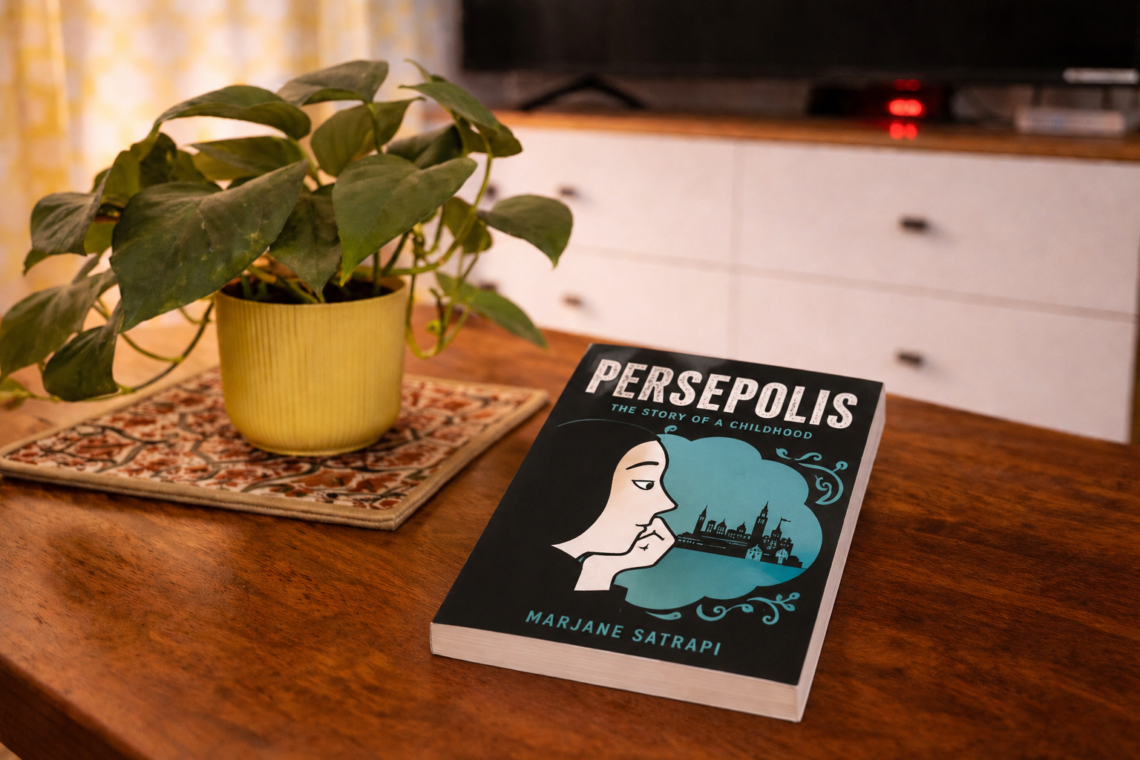
Why Should You Read The Complete Persepolis by Marjane Satrapi
Once again, I arrived at my usual conclusion: one must educate oneself.
Sharing my thoughts on this week’s pick, “The Complete Persepolis” by Marjane Satrapi. The book is is definitely an engaging read. I first came across it a couple of years ago while browsing the graphic novel section at Crossword. To be honest, graphic novels are not usually my go‑to picks, and that hasn’t really changed much over time. What caught my attention was the title, the setting, and the author. Together, they made me curious about how such a serious, emotional story could be told through a visual format, and that is what made me pick it up, and why it has stayed with me over the years. So let’s step into The Complete Persepolis and see why it leaves such a lasting impression.
Story Overview:
The Complete Persepolis tells the life story of Marjane Satrapi as she grows up in Iran during and after the Islamic Revolution. Through her we see the shift from a free, modern society to one ruled by strict religious laws. As a child, she struggles to make sense of the changes around her. Later, as an adult, she leaves Iran and wrestles with questions of identity while living abroad. Eventually, she returns home, only to realize how much both she and her country have changed.
Characters and Themes:
Marjane Satrapi is the heart of the story. We first see her as a child full of curiosity and innocence, and later as a rebellious young woman who questions authority while navigating the shifting realities around her. Her journey is deeply shaped by her family. They are supportive and loving, yet always realistic about the dangers surrounding them, they continue to encourage her independence while guiding her through difficult times. Together, these characters form the emotional foundation of Marjane’s story.
The theme of change runs throughout the book. First we get to see, how the political and social shifts in Iran affects the everyday lives of people. At the same time, we also see Marjane’s personal struggle with change first as child and later as an immigrant learning to adapt to a new world. Her story is relatable to anyone who has faced challenges with finding ones identity in a changing world.
What Makes it Special:
One of the things which I love the most about the book is its simplicity. The black‑and‑white illustrations may look minimal at first, but each of them carry deep emotions. Every frame feels intentional taking you straight into the moment without any distractions. Another amazing thing about the book is how naturally it weaves politics into everyday life. Marjane is not trying push an agenda, she is simply sharing with us life as it is. Her voice is honest, raw, and unapologetic which makes it easy to trust.
Who Should Read It:
If you ask me, everyone should at least read it once, especially in today’s world, where war doesn’t seem to affect us as deeply anymore, almost as if we’ve grown used to it. Everyday we scroll past news of conflict without even pausing to reflect. Persepolis is a reminder that behind every headline are real people and real families, with disrupted lives, fear, losses, and the small everyday moments that sometimes disappear entirely.
Where to Read:
The Complete Persepolis by Marjane Satrapi
Similar Reads:
- The Boy in the Striped Pajamas by John Boyne
- The Lion Women of Tehran by Marjan Kamali
- The Book Thief by Markus Zusak
If you’ve already read it, don’t forget to share your thoughts in the comments, I would love to read them.
Happy reading!


3 Comments
Bhawna Pradeep Kumar
Fascinating to know that someone can express emotions via visuals this clearly
tanisha.sharma888
So true, enjoy reading….!!
Pingback: